
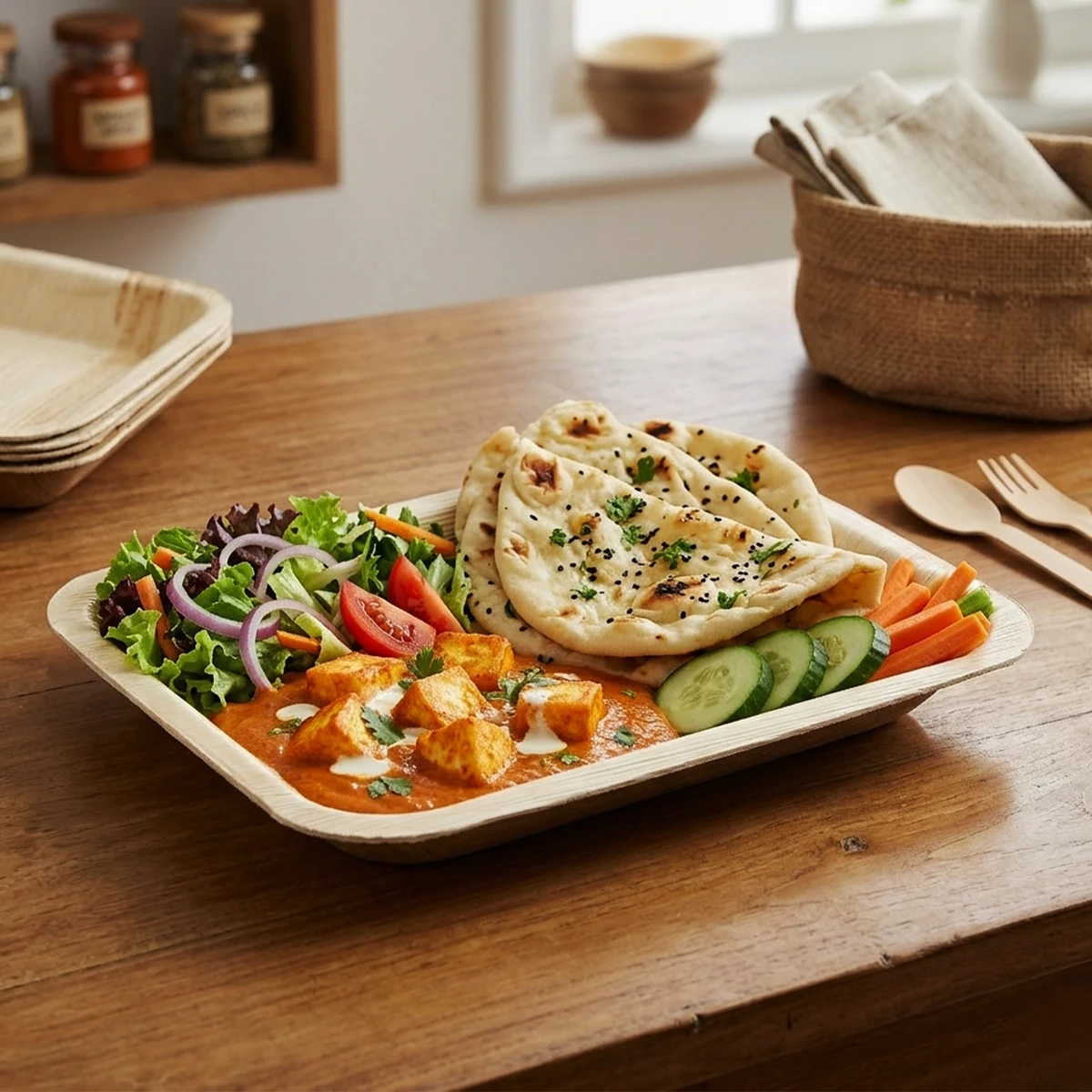
Start with a Trial Order 📦
Experience Foliware's premium areca palm leaf tableware with a minimum order of just 1 carton. Ideal for first-time buyers, distributors, HoReCa businesses, and institutional procurement.
Experience Foliware's premium areca palm leaf tableware with a minimum order of just 1 carton. Ideal for first-time buyers, distributors, HoReCa businesses, and institutional procurement.
A certificate of origin is a document stating the country in which goods were produced. India issues two kinds: non-preferential certificates from chambers of commerce and other agencies authorised by the Directorate General of Foreign Trade, and preferential proof, which for EU shipments under the Generalised Scheme of Preferences is a statement on origin from a REX-registered exporter rather than a certificate at all.
Almost every misunderstanding in this area comes from treating “certificate of origin” as one document that does one job. It is two documents doing two unrelated jobs, issued by different bodies, under different rules, for different readers.
| Non-preferential certificate of origin | Preferential proof of origin for the EU | |
|---|---|---|
| What it asserts | The country in which the goods were produced | That the goods meet the origin rules of a specific preference scheme |
| What it achieves | Nothing on duty. It satisfies contract, banking and regulatory requirements that call for evidence of origin | Access to the preferential duty rate, where one exists for your code |
| Who issues it in India | Chambers of commerce, industry associations, export promotion councils and other bodies authorised under Appendix 2E of the Foreign Trade Policy | Nobody issues it. The exporter makes it out themselves, having first registered in the REX system |
| Form it takes | A certificate on a prescribed format, now issued electronically through the DGFT common digital platform | A prescribed wording added to the commercial invoice, delivery note, packing list or other commercial document |
| Legal basis on the EU side | Articles 59 to 63 of Regulation (EU) No 952/2013, the Union Customs Code | Articles 68, 92 and 93 and Annex 22-07 of Commission Implementing Regulation (EU) 2015/2447 |
| Who checks it | Your bank, your customer, sometimes customs where a measure requires it | The customs authority at import, and potentially a later verification request to India |
If a supplier offers you “a certificate of origin” and you are expecting a duty reduction, ask which of these two they mean. They are frequently offering the first while you are asking for the second.
India does not have a single issuing authority. The Directorate General of Foreign Trade authorises bodies to issue non-preferential certificates and lists them in Appendix 2E of the Foreign Trade Policy. The categories are chambers of commerce and industry, industry associations, export promotion councils and trade federations, which must be registered as a company, society or trust and must not be set up for profit.
In Karnataka, where Foliware India LLP manufactures, the authorised bodies listed include the Federation of Karnataka Chambers of Commerce and Industry, the Bangalore Chamber of Industry and Commerce, and the Visvesvaraya Trade Promotion Centre, among others.
Two practical consequences follow.
The first is that the name on your certificate will be a chamber or association you have never heard of, not “the Government of India”. That is normal and it is not a red flag.
The second is that you can check the issuer. The Appendix 2E list is public. If a certificate arrives from a body that is not on it, that is worth a question, and it belongs on the same checklist as the other checks in how to verify an Indian exporter before you send money.
India runs a common digital platform for the issuance of certificates of origin, operated under the Directorate General of Foreign Trade, through which designated issuing agencies work. Preferential and non-preferential certificates are applied for and issued electronically, and the exporter’s Importer Exporter Code details must be current at DGFT before an application can be filed.
For a European buyer this changes three things.
Certificates arrive as electronic documents with a reference number, not as embossed originals in a courier pouch. If your bank or your letter of credit requires a signed original, say so before the goods ship, because retrofitting a paper original after the fact is slow.
The reference number is verifiable. A digitally issued certificate carries an identifier that can be checked, which is a better authenticity control than a wet stamp.
Issuance is fast, but it still depends on the exporter having their IEC record in order. A stale IEC record is a real cause of last-minute delay and it is invisible to you until it bites.
This is the single most important line in this article for a buyer chasing a lower duty rate.
To claim Generalised Scheme of Preferences treatment on goods entering the EU from India, the proof is a statement on origin made out by the exporter under the Registered Exporter system, the EU’s framework for self-certification of origin. A chamber of commerce certificate does not achieve it. Neither does a Form A from an exporter who has moved to REX.
The rules that matter on a first shipment:
Whether preference is worth anything to you at all depends on the third country duty for your commodity code, which is a TARIC lookup and is set out in duty and origin on Indian-made tableware entering the EU. Where the third country rate is already zero, the statement on origin saves nothing and you should not pay anyone to arrange it.
A non-preferential certificate of origin is a short document and almost all of its failure modes are mismatches with other documents in the same set.
| Field | What it must show | How it fails |
|---|---|---|
| Exporter | The legal entity named as shipper on the bill of lading and as seller on the invoice | A group trading name on the certificate and a manufacturing entity on the invoice |
| Consignee | The party named on the transport document | “To order” on the bill of lading and a named consignee on the certificate, with no explanation |
| Country of origin | India, stated unambiguously | “Made in Asia”, or the port of loading given instead of the country of production |
| Description of goods | A description that matches the commercial invoice and is recognisable against the customs declaration | Marketing description on the certificate, technical description on the invoice, neither matching the declared code |
| Marks, numbers and packages | Carton marks and package count matching the packing list | Package count corrected on the packing list after the certificate was issued |
| Invoice number and date | The commercial invoice the consignment travels on | A proforma invoice number, because the certificate was applied for before the final invoice was raised |
| Gross and net weight | Matching the packing list and the bill of lading | Rounded on one document and exact on another |
| Issuing body and signature | An agency authorised under Appendix 2E, with certificate reference | An unlisted body, or a certificate issued after the vessel sailed with no explanation of the delay |
The pattern is consistent. Nobody fails because the certificate is wrong in itself. They fail because the certificate and the invoice and the packing list and the bill of lading were prepared at different times by different people and nobody reconciled them. Under a letter of credit that is a discrepancy and the bank can refuse the presentation, which is why this document sits inside the payment conversation as well as the customs one. That is covered in payment terms for a first import from India.
Less than most buyers expect, and this is worth knowing before you build a process around it.
The EU does not require a non-preferential certificate of origin on an ordinary import as a matter of course. It requires one where a specific measure attaches to the origin, such as an anti-dumping duty, a quota or a surveillance measure. If your commodity code carries none of those, your broker may file the entry, declare India as the country of origin, and never be asked to produce the certificate at all.
Where the certificate does earn its keep is elsewhere in your file. Banks call for it under documentary credits. Retail and foodservice customers ask for it in vendor onboarding packs, alongside the other documents set out in the EU-specific documents a European buyer adds to a standard vendor pack. Insurers and some public sector tenders ask for it. Your own origin-marking and country-of-origin claims on packaging rest on it.
So the honest position is this: order it because your bank, your customer or your own compliance file needs it, not because customs will stop the container without it. If none of those apply to you and your code carries no origin-specific measure, you may not need one.
The United Kingdom left the EU preference system and operates its own Developing Countries Trading Scheme with its own rules of origin and its own proof requirements, which accept an origin declaration or a Form A rather than an EU REX statement on origin. A buyer serving both the United Kingdom and Ireland from one supply chain therefore needs two different origin documents for the same goods. Confirm the current UK position with HM Revenue and Customs before assuming the EU paperwork transfers.
Do I need a certificate of origin to import palm leaf tableware from India into the EU? Not automatically. The EU requires one where a specific measure attaches to the origin of your commodity code, such as an anti-dumping duty, a quota or surveillance. Outside those cases your broker declares India as the origin without producing a certificate. Banks, customers and vendor onboarding packs are the more common reasons to hold one.
Will a certificate of origin reduce my duty? No. A non-preferential certificate proves where goods were made and has no effect on the rate. Preferential treatment under the Generalised Scheme of Preferences rests on a statement on origin made out by a REX-registered exporter, which is a different document created by a different process.
Who issues certificates of origin in India? Bodies authorised by the Directorate General of Foreign Trade and listed in Appendix 2E of the Foreign Trade Policy: chambers of commerce and industry, industry associations, export promotion councils and trade federations. They must be registered as a company, society or trust and must not be set up for profit. Issuance now runs through India’s common digital platform.
How long does it take to obtain one? Issuance through the digital platform is quick once the application is complete, but the exporter’s Importer Exporter Code record has to be current at DGFT first, and updating it takes time. Ask your supplier to confirm their IEC record is current at the order stage rather than at shipment.
Can the certificate be issued after the goods have shipped? Issuing bodies can issue retrospectively, but a certificate dated after the vessel sailed invites questions from a bank under a documentary credit and from customs during a verification. Where a retrospective issue is unavoidable, have the reason documented at the time rather than explained later.
What happens if the details do not match the invoice? Under a letter of credit the bank can treat the mismatch as a discrepancy and refuse the presentation, which delays payment and can delay release of the transport documents. At customs a mismatch between the certificate and the declaration is the kind of thing that triggers a documentary check. Reconcile the invoice, packing list, bill of lading and certificate before shipment, not after.
Is an electronic certificate acceptable, or do I need a signed original? Most European buyers and customs authorities accept the electronic document issued through India’s digital platform. Some letters of credit still call for a signed original. Check the credit terms before shipment, because obtaining a paper original after the fact is the slower path.
Lane, documentation and destination rules for the markets this article applies to. Each page carries the route, the paperwork set and the quotation route for that destination.
Each link below answers the question this article raises next, whether that is the rule behind a decision, the same question in another destination, or the commercial step that follows.
Send us the product, the volume per shipment or per year, and the destination country and port of entry, and tell us whether you need preferential or non-preferential origin evidence. Those are two different documents prepared through two different routes, and knowing which you need before the works order is raised avoids a retrospective issue. The enquiry form takes all four.