
Start with a Trial Order 📦
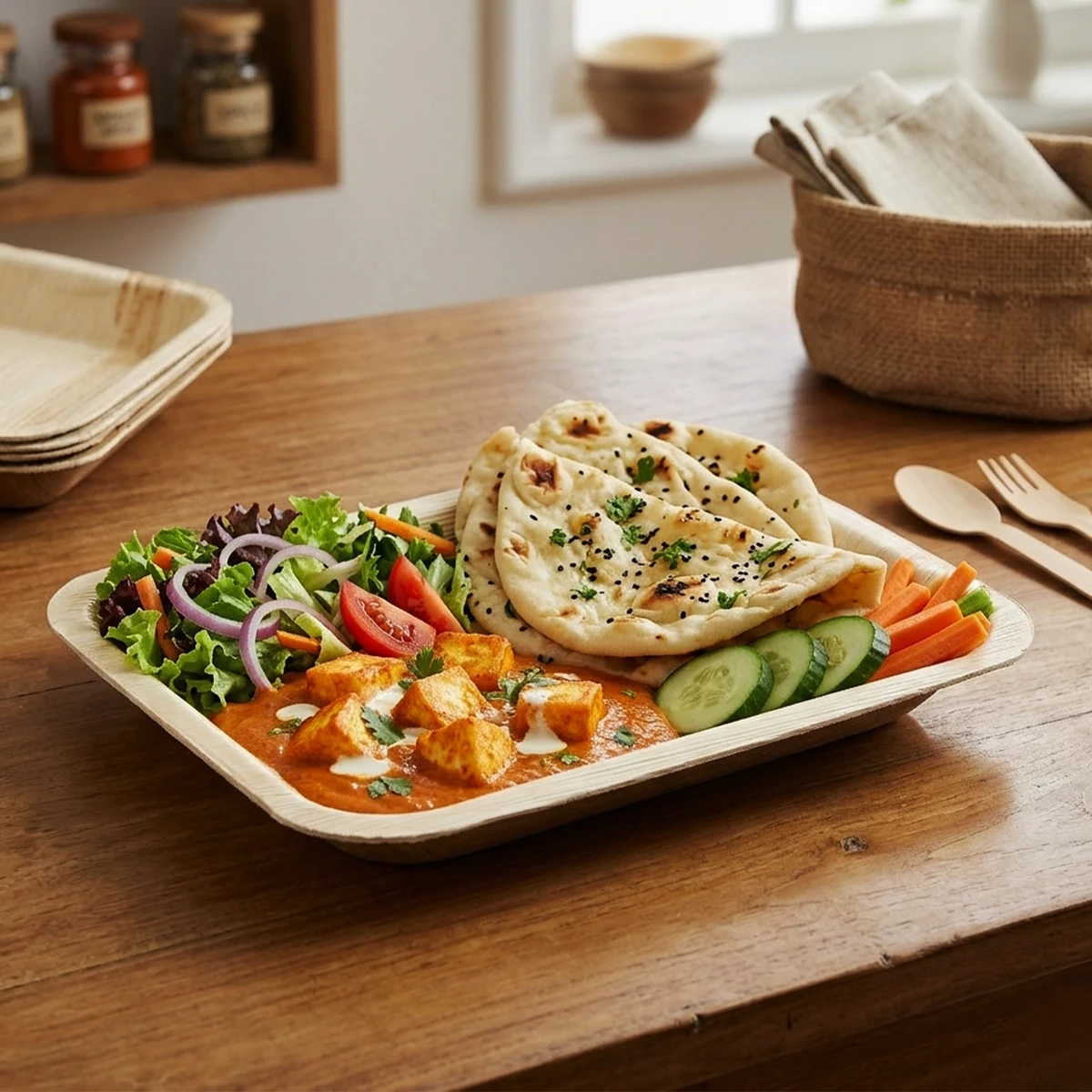
Experience Foliware's premium areca palm leaf tableware with a minimum order of just 1 carton. Ideal for first-time buyers, distributors, HoReCa businesses, and institutional procurement.
Experience Foliware's premium areca palm leaf tableware with a minimum order of just 1 carton. Ideal for first-time buyers, distributors, HoReCa businesses, and institutional procurement.
Note. National rules in Sweden,
Denmark and Norway can change. Confirm current requirements with
Naturvardsverket, Miljostyrelsen, Miljodirektoratet or Tolletaten as
relevant before you ship.
Sweden, Denmark and Norway each regulate single use tableware through
their own national authority rather than one shared Nordic rule.
Sweden’s Naturvardsverket sets national restrictions and labelling
requirements. Denmark’s Miljostyrelsen runs an extended producer
responsibility registration and fee scheme effective from 1 January
2025. Norway’s Miljodirektoratet sets national product rules independent
of EU law, and Norway is not an EU member state, so its own customs
authority, Tolletaten, governs import procedure separately from the EU
customs process.
It is tempting to treat Sweden, Denmark and Norway as one Nordic bloc
with one set of rules. They are not. Each has its own environmental
regulator, its own mechanism for controlling single use tableware, and
in Norway’s case, its own customs authority entirely separate from the
EU system the other two operate inside. The comparison below sets out
where they align and where they do not.
| Sweden | Denmark | Norway | |
|---|---|---|---|
| National environmental regulator | Naturvardsverket | Miljostyrelsen | Miljodirektoratet |
| Mechanism for single use tableware | National restrictions plus labelling requirements | Extended producer responsibility registration and fees | National product regulation rules, bans and requirements set directly in Norwegian rule |
| Confirmed effective date | Transposed into national rule from 1 January 2022 | Registration and fee obligations effective 1 January 2025 | Bans in effect from June 2021, with requirements continuing through 2025 |
| EU membership | EU member state | EU member state | Not an EU member state |
| Customs authority for import | EU customs procedure | EU customs procedure | Tolletaten, Norwegian Customs, operating its own national import procedure |
Sweden’s environmental protection agency, Naturvardsverket, sets out
the country’s national restrictions on single use plastic products and
disposable products more broadly, transposed into Swedish rule from 1
January 2022. Alongside restrictions on certain items, Sweden’s
framework includes labelling requirements, meaning some products carry
marking obligations rather than an outright ban. As with the other
markets in this comparison, whether a specific plant fibre product falls
under a restriction or a labelling requirement depends on its material
classification, which is a question to confirm against the product’s
actual specification rather than assume from its category.
Denmark’s environmental protection agency, Miljostyrelsen, operates
an extended producer responsibility scheme for single use plastics, with
registration and fee obligations that took effect on 1 January 2025.
This is a more recent and more specifically dated obligation than
Sweden’s, and it works on a different mechanism: rather than labelling
or an outright ban, the party responsible registers and pays a fee tied
to the products placed on the Danish market. As in Germany’s packaging
register model, the obligation in a scheme structured this way typically
attaches to whichever party places the goods on the national market,
which in an import arrangement is ordinarily the Danish importer or
distributor rather than the overseas manufacturer.
Norway’s environment agency, Miljodirektoratet, sets national rules
on single use plastic products, including plates, cutlery and
containers, with bans in effect from June 2021 and further requirements
continuing through 2025. These are Norway’s own national rules, set
through Norwegian regulation.
Norway is not an EU member state. Its customs procedure for imports
is set and administered by Norwegian Customs, Tolletaten, which
publishes its own import guide covering declaration, duty and VAT
procedure for goods entering Norway. This article does not characterise
Norway’s broader trade or customs union status beyond that fact. What
matters practically for an importer is that Norwegian import procedure
is not the same procedure used for the EU member states in this
comparison, and Tolletaten’s own import guide is the correct reference
for how a shipment is declared and cleared into Norway.
Across all three markets, public sector and institutional buying,
schools, hospitals, municipal catering and similar institutional buyers,
is a channel worth planning for separately from retail or horeca
distribution. Public tenders in these markets commonly build
environmental criteria into their specifications, which makes
institutional procurement a route where sourcing decisions get made on
different terms than a retail listing does. This article does not attach
a figure to the size or growth of that channel. It is flagged here as a
channel to understand on its own terms when building a Nordic market
entry plan, not as a quantified opportunity.
A commercial invoice and a packing list accompany every shipment into
any of the three markets, and a certificate of origin is added where the
destination customs process asks for one. Past that baseline, the
national mechanism, labelling in Sweden, registration and fees in
Denmark, national product rules in Norway, and the customs procedure, EU
wide for Sweden and Denmark, Tolletaten specific for Norway, are what
actually differ between the three, and a buyer moving between them
should treat each as its own market rather than assuming a Swedish
answer carries over to Denmark or Norway.
Do Sweden, Denmark and Norway share one set of single use
plastics rules? No. Each operates its own national mechanism
through its own regulator: Naturvardsverket in Sweden, Miljostyrelsen in
Denmark and Miljodirektoratet in Norway, with different mechanisms and
different effective dates.
Is Norway inside the EU customs system? No. Norway
is not an EU member state, and its import procedure is set and
administered by its own customs authority, Tolletaten. Its import guide
is the correct reference for how a shipment is declared and cleared.
What is Denmark’s extended producer responsibility
scheme? A registration and fee obligation for single use
plastics run by Miljostyrelsen, effective from 1 January 2025. It
typically attaches to whoever places the product on the Danish market,
ordinarily the Danish importer rather than an overseas manufacturer.
Does Sweden ban single use tableware outright?
Sweden’s framework combines restrictions on certain items with labelling
requirements on others. Whether a specific product is restricted or
simply subject to labelling depends on its classification, which should
be confirmed against the product’s own material specification.
Is public sector procurement significant in these
markets? It is worth planning for as its own channel, since
institutional and public tenders in the Nordic markets commonly include
environmental criteria in their specifications. This article does not
state a figure for its size.
Naturvardsverket, Sweden Single-use plastic products and other
disposable products
https://www.naturvardsverket.se/en/guidance/plastic/single-use-plastic-products-and-other-disposable-products/
Supports: Sweden’s transposition effective 1 January 2022 and its
national restrictions and labelling rules
Miljostyrelsen, Denmark Single-use plastics
https://eng.mst.dk/industry/waste/single-use-plastics Supports: extended
producer responsibility registration and fee obligations effective 1
January 2025
Miljodirektoratet, Norway Engangsprodukter av plast: Forbud og
krav
https://www.miljodirektoratet.no/ansvarsomrader/kjemikalier/produktforskriften/engangsprodukter-av-plast-forbud-og-krav/
Supports: Norway’s national rules covering single use plates, cutlery
and containers, bans from June 2021 and requirements continuing through
2025
Tolletaten, Norwegian Customs Import Guide
https://www.toll.no/en/corporate/import/import-guide-for-beginners
Supports: general Norwegian import declaration, duty and VAT procedure,
administered separately from the EU customs process
Lane, documentation and destination rules for the markets this article applies to. Each page carries the route, the paperwork set and the quotation route for that destination.
Each link below answers the question this article raises next, whether that is the rule behind a decision, the same question in another destination, or the commercial step that follows.
Send the product, the volume and the destination. A quotation follows within one business day.