
Start with a Trial Order 📦
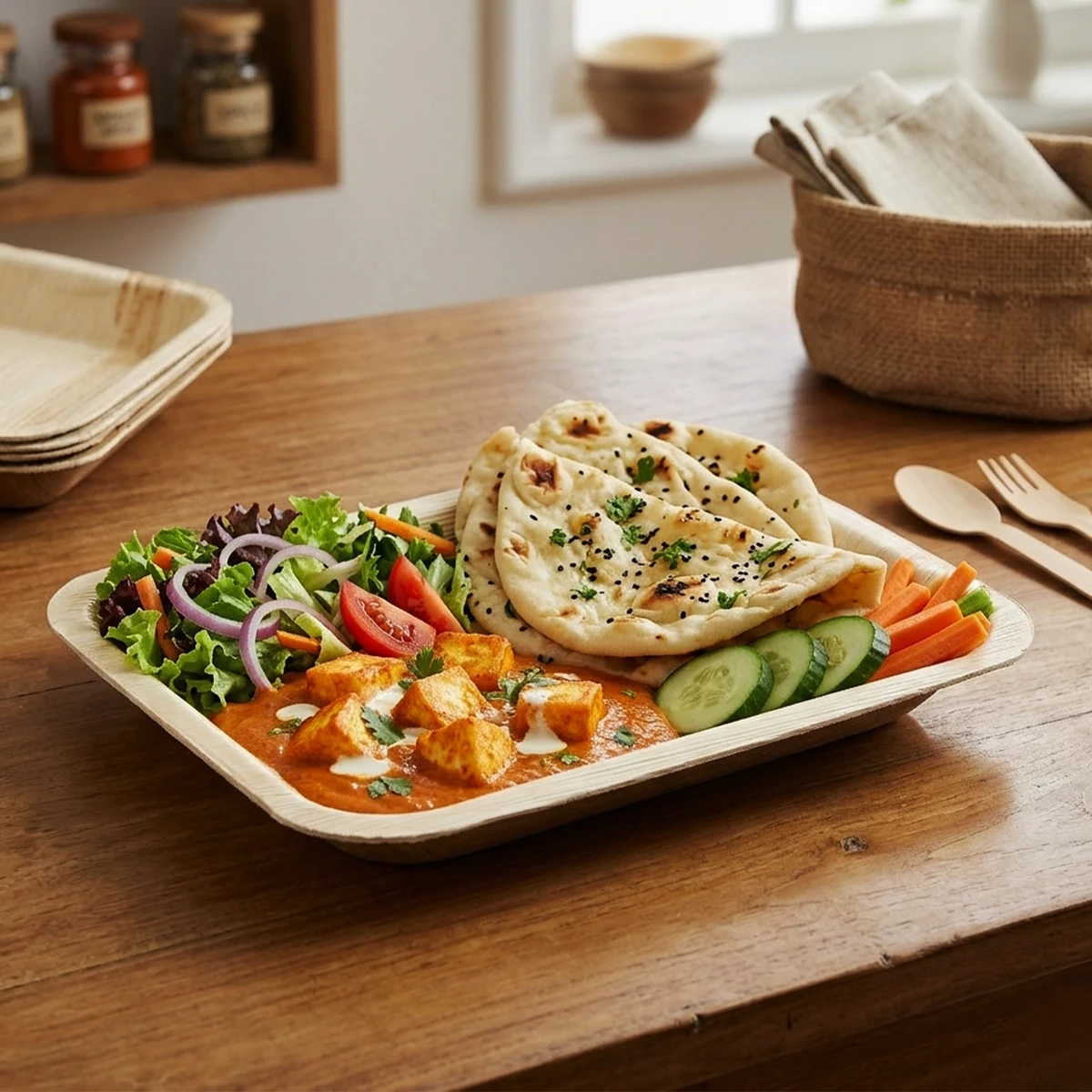
Experience Foliware's premium areca palm leaf tableware with a minimum order of just 1 carton. Ideal for first-time buyers, distributors, HoReCa businesses, and institutional procurement.
Experience Foliware's premium areca palm leaf tableware with a minimum order of just 1 carton. Ideal for first-time buyers, distributors, HoReCa businesses, and institutional procurement.

German and Nordic hotels rarely buy disposables property by property. Most buy through a purchasing company or a group framework, which means your counterparty is a buyer scoring a supplier file rather than a chef choosing a plate. In the Nordics the decisive constraint is often the hotel’s own Nordic Swan Ecolabel licence, which restricts disposables in daily serving and allows them for large events. That shapes what gets ordered and when.
Three routes exist in these markets, and they behave differently. Identify which one you are dealing with before you quote, because the evidence each wants is different.
| Route | Who decides | What they score | What a supplier must be ready for |
|---|---|---|---|
| A hotel purchasing company acting for many independent properties | A category buyer employed by the purchasing company | Landed price, continuity, compliance file, one invoice across many properties | Onboarding into their vendor system before any property can order |
| A group framework negotiated centrally, drawn down by each hotel | Group procurement, with property level ordering | Framework price held for a term, service level, sustainability evidence | Annual price validity, and delivery to many small drop points |
| A single independent property | The F and B manager or head chef, sometimes the owner | Performance on the plate, delivery reliability, price | Small quantities, fast response, samples that reach a kitchen |
Germany has a developed intermediary layer. progros Einkaufsgesellschaft mbH, for example, is a purchasing company for the hotel sector and a preferred partner of Hotelverband Deutschland (IHA), the German hotel association. Selling into that structure is a two stage process: you are approved as a supplier by the purchasing company, then each property decides whether to draw on you. A quotation sent to a hotel that buys through such a company usually goes nowhere, because the hotel has no mechanism to place it.
The obligation German buyers most often mention is the Mehrwegangebotspflicht, the reusable offer requirement under section 33 of the Verpackungsgesetz, the German packaging act, in force since 1 January 2023. Read it against a banqueting operation before assuming it bites.
It applies to single-use plastic food containers and to single-use beverage cups of any material, filled at the point of sale with food or drink to take away. It does not cover plates, wrappers or paper bags without plastic components. Businesses with a maximum of five employees and a sales area of 80 square metres or less may instead offer to fill a container the customer brings.
Read that carefully. A plated banquet served on site is not takeaway, and a plate is not a beverage cup. The German reuse obligation therefore does not prohibit disposable plates at a banquet. What it does do is shape the hotel’s coffee and takeaway offer, and it sets the cultural expectation inside German hotel procurement that single use needs a justification. The justification that works is an event format with no dishwashing capacity: an outdoor reception, a stadium or arena hospitality suite, a marquee, a construction or festival catering contract, a very large conference where the plate room cannot turn 1,200 covers.
The obligation that does bite on you as an importing buyer is registration in the LUCID Packaging Register before supply begins, set out in packaging EPR in Germany.
A large share of Nordic hotels hold a Nordic Swan Ecolabel licence. Criteria document 055, Hotels and other accommodation, version 5.11, is valid until 31 October 2028 and contains requirements restricting disposable items in daily serving, with defined exceptions including servings above 500 guests and certain established luxury hotel standards.
For a supplier this is the most useful fact in the article, because it tells you exactly where demand sits. A Swan licensed hotel is not going to put a disposable plate in its breakfast room. It will use disposables for the large outdoor banquet, the summer garden party, the conference lunch served away from the kitchen and the sports or festival contract. The buyer is therefore ordering in bursts against an event calendar, not on a weekly replenishment cycle, which changes pack size, pallet quantity and lead time expectations. It also means the number the buyer cares about is covers per event and how many events per season, which is why that belongs in your first enquiry.
A licensed hotel also has to evidence its own compliance. Where an ecolabelled alternative exists for a category, the licence pushes them towards it, and they will ask you for documentation rather than assertions. Send the document, not a paragraph of marketing.
Hotel groups in these markets increasingly ask suppliers for a fixed file rather than a brochure. The table sets out what is actually usable to them and why they want it.
| Document | Why the operator needs it | What makes it acceptable |
|---|---|---|
| Declaration of Compliance under Regulation (EC) No 1935/2004 | Food contact legality for articles they serve on | Names the article, not the material, with the supporting test file available |
| Migration test report | Backs the declaration for their service conditions | Same simulant, time and temperature as their actual use |
| Packaging data by material and net weight | Feeds their own or their supplier’s EPR return | Weights per packaging component, per carton and per pallet |
| Producer registration numbers for the market of supply | Proves lawful supply in that country | The LUCID number, the Nordic registration or PRO membership, as applicable |
| Any compostability certificate, with scope | Waste handling and any claim they repeat | Certificate holder, named products in scope, standard version, expiry, verified on the certifier’s register |
| Social audit report or corrective action plan | Their supplier code of conduct | A current report, with the corrective actions and their status, not a grade |
The EU-specific documents a European buyer adds to a standard vendor pack sets out who inside a supplier owns each of these, and the supplier data you need before you can file an EPR return covers the weights in the format a scheme will accept.
Large hotel groups have spent three years building supplier questionnaires around EU sustainability reporting. The rules narrowed in 2026, and suppliers should understand the position rather than answer whatever arrives.
Directive (EU) 2026/470 of 24 February 2026 amended the corporate sustainability reporting and due diligence framework, including Directive (EU) 2022/2464, the Corporate Sustainability Reporting Directive. The effect is that far fewer companies are in scope than under the original CSRD timetable, and there is a limit on the sustainability information an in-scope company may require from smaller undertakings in its value chain.
Two practical consequences. First, a mid sized hotel group may no longer be a reporting entity at all, which does not stop it asking, but does change the basis of the request from legal obligation to commercial preference. Second, where a group is in scope, the value chain limit means a supplier below the threshold should not be required to produce disclosures beyond the voluntary standard. Confirm the current position with your own adviser before relying on this, because the national transposition is what your customer’s lawyer will cite.
The commercially sensible response is not to refuse. It is to hold one standing pack covering energy, waste, materials, employment and audit position, and send that rather than completing a different 60 question spreadsheet for every group. A supplier who can answer the same questions the same way twice is worth more to a category buyer than one who cannot.
A banqueting enquiry is quotable only when it carries covers per event and event frequency, because those two numbers set everything else: pack count, cartons per drop, pallet quantity, storage at the property and how often you ship.
Two examples make the difference visible. A 400 cover outdoor summer banquet run six times a season is a single delivery, stored at the property, one pallet configuration, one price. A 1,200 cover conference catering contract running weekly is a replenishment programme with a service level, and it will need either European stock or a call-off schedule against a committed annual quantity. Ask which one you are being asked to quote before you quote it, and read holding stock in Europe or shipping to order before committing to the second.
Say this plainly, because a category buyer who hears it takes the rest of your file more seriously.
A hotel with dishwashing capacity for its whole banqueting operation should use it. The EU Green Public Procurement criteria for food procurement, catering services and vending machines point catering services towards disposables for takeaway as a general rule, and a Swan licence restricts them in daily serving. If the plate room can turn the covers, reusable is the right answer and no disposable supplier should argue otherwise.
A hotel running a long, hot, wet service line. Score the sample trial honestly against your own dishes and let the material that performs win.
A property buying a few cases at a time with next day expectations. A container from India is the wrong structure. Buy through a European stockholder or your purchasing company’s existing distributor.
Where disposables are genuinely required, by an outdoor event, a venue with no plate room, a mobile or satellite kitchen, or a peak that exceeds dishwashing capacity, the specification conversation in what HORECA buyers specify is the right place to start.
Do we sell to the hotel or to its purchasing company? To the purchasing company first, if the group uses one, because the property usually cannot buy outside the approved list. Ask at the first call which structure the account sits in. Quoting the wrong entity is the most common reason a good price gets no response in Germany.
Does the German reuse obligation ban disposable plates at a banquet? No. Section 33 of the Verpackungsgesetz covers single-use plastic food containers and single-use beverage cups filled for takeaway. A plated banquet served on site is a different situation, and plates are outside the listed packaging. Confirm the position for your own format with your German legal adviser rather than relying on a summary.
Why does a Nordic hotel ask for our ecolabel position? Because its own Nordic Swan licence requires it to evidence choices, and requirements in criteria document 055 restrict disposables in daily serving with exceptions for large servings. Give them the document that exists and say clearly where you have none. A supplier who claims a label they do not hold fails the audit, not the buyer.
Who registers for packaging EPR, us or our supplier? In almost every case the European entity that first places the packaging on that national market, which is normally the importing buyer. You or your supplier: who registers for EPR when you import from India works through the structures where the answer differs.
What should we put in a hotel group tender that we usually leave out? Days of cover and price validity. Banqueting demand is lumpy and a framework priced for twelve months without a stated validity mechanism will be renegotiated at the first currency or freight move. Why a tableware quotation expires sets out what actually moves underneath the number.
Do we need a compostability certificate to sell to a Nordic hotel? Only if you or the hotel intend to make a compostability claim, or the tender asks for one. If you do, name the standard, the certificate holder, the products in scope and the expiry date, and expect the buyer to check the certifier’s public register. What a compostability certificate proves and what it does not explains what is and is not in scope.
Lane, documentation and destination rules for the markets this article applies to. Each page carries the route, the paperwork set and the quotation route for that destination.
Each link below answers the question this article raises next, whether that is the rule behind a decision, the same question in another destination, or the commercial step that follows.
Send your enquiry with the product, the volume, the destination, the covers per event and how many events a season. For example: Reinforced Round Traditional Patravali Meal Plate, around 400 covers per event, 14 events between May and September, delivered to a hotel in Stockholm. Those two numbers decide pack count, pallet configuration and whether a single shipment or a call-off schedule fits. Foliware ships to buyers in Germany , Sweden , Denmark and Norway .
Request a quotation