
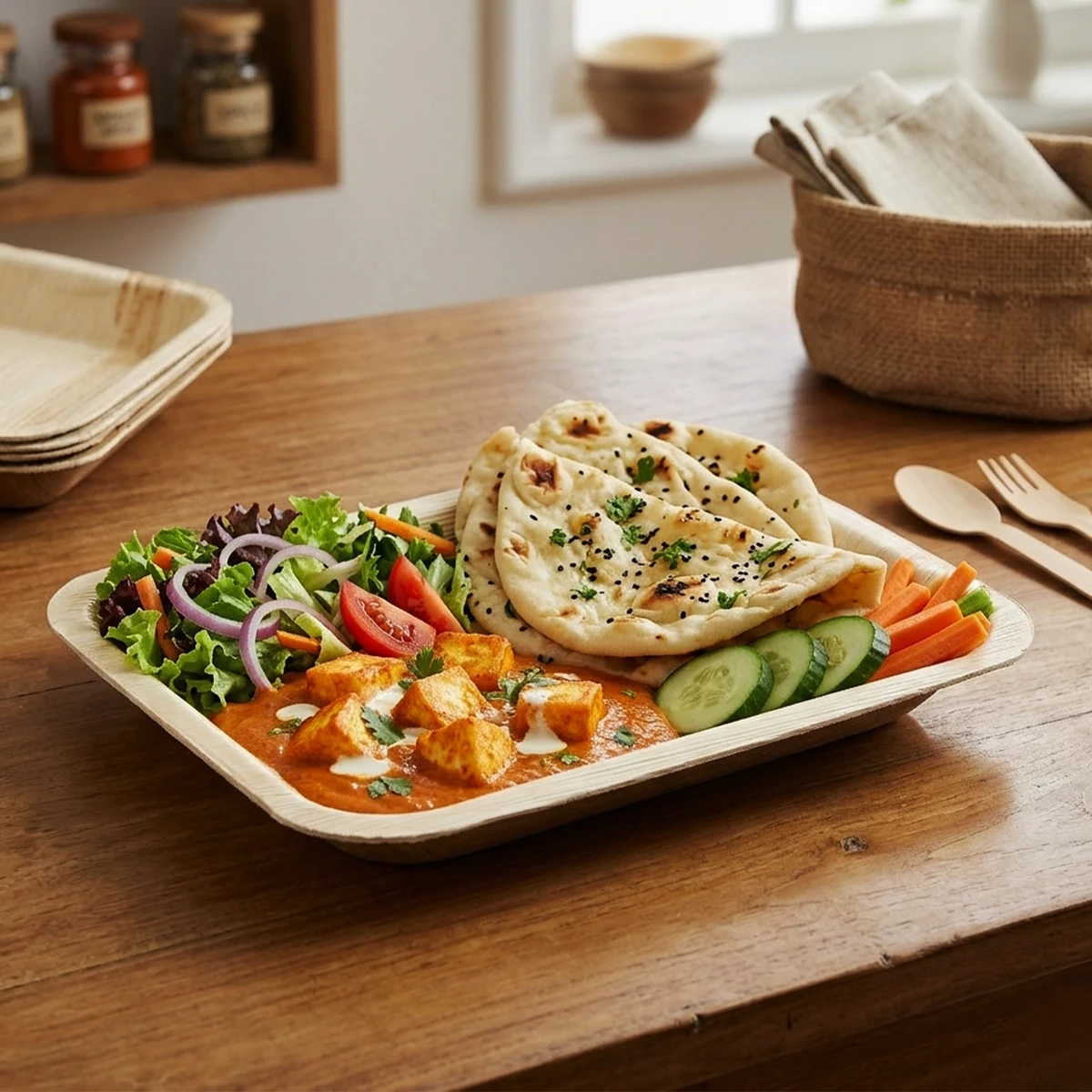
Start with a Trial Order 📦
Experience Foliware's premium areca palm leaf tableware with a minimum order of just 1 carton. Ideal for first-time buyers, distributors, HoReCa businesses, and institutional procurement.
Experience Foliware's premium areca palm leaf tableware with a minimum order of just 1 carton. Ideal for first-time buyers, distributors, HoReCa businesses, and institutional procurement.
The United Kingdom and Ireland run separate packaging producer responsibility regimes, and a buying desk serving both islands needs two arrangements. The UK tests you on turnover and tonnage, splits producers into small and large, and has large producers reporting to an environmental regulator every six months. Ireland requires major producers to join Repak, removed self-compliance in 2023, and is inside the EU packaging regulation. Great Britain is not.
Buyers who serve Britain and Ireland from one desk usually built that desk before 2021, when the two markets sat inside the same regulatory perimeter.
That is no longer true, and the divergence is not cosmetic. Ireland is an EU member state, so Regulation (EU) 2025/40, the Packaging and Packaging Waste Regulation, has applied there since 12 August 2026. England, Scotland and Wales are outside it: the Department of Agriculture, Environment and Rural Affairs records that a decision on whether to align with the PPWR across the UK has not been taken and that a consultation is planned. Northern Ireland sits in a third position, set out below.
The two national schemes were already built differently. The UK scheme is a statutory reporting obligation to a public regulator, with a compliance scheme as an optional intermediary. The Irish scheme is membership of an approved compliance scheme, with the statutory obligation discharged through it. Those are not the same shape, and they do not fail in the same way.
The table compares the points that determine whether you are caught, who you deal with and when you file.
| United Kingdom | Ireland | |
|---|---|---|
| Governing framework | UK extended producer responsibility for packaging, known as pEPR, administered by the four national environmental regulators | European Union (Packaging) Regulations 2014, amended in 2022 with effect from 1 January 2023, alongside Regulation (EU) 2025/40 |
| Who is caught | Organisations with annual turnover above £1 million that supply or import more than 25 tonnes of packaging in the UK and carry out a packaging activity | Major producers, defined as producers placing 10 tonnes or more of packaging on the market annually with annual turnover above €1 million |
| Producer classes | Two. Small producer: turnover above £1 million and up to £2 million supplying more than 25 tonnes, or turnover above £1 million supplying more than 25 and no more than 50 tonnes. Large producer: turnover above £2 million supplying more than 50 tonnes | One statutory class of major producer, with Repak offering Regular and Scheduled membership types by company profile |
| Counterparty | The environmental regulator for your nation: Environment Agency, Natural Resources Wales, SEPA or the Northern Ireland Environment Agency. A compliance scheme may act for you | Repak, a not-for-profit body owned by its members operating under licence from the Department of Climate, Energy and Environment |
| Self-compliance | Reporting direct to the regulator without a compliance scheme is available | Removed by the 2022 amendment. Major producers must be members of an approved body |
| Reporting rhythm | Large producers report every six months. Small producers report annually | On Repak’s scheme rules and membership terms |
| What you pay | Registration charges, waste disposal fees based on household packaging reported, scheme administrator costs, and packaging waste recycling notes or export recycling notes for large producers | Annual membership fees aligned to the volume of packaging placed on the market |
| EU packaging regulation | Does not apply in England, Scotland or Wales. Applies in Northern Ireland in part | Applies in full from 12 August 2026 |
Three things have to be true before a UK obligation exists: annual turnover above £1 million, more than 25 tonnes of packaging supplied or imported in the UK, and a qualifying packaging activity. Miss any one and there is no obligation.
The packaging activities are the part buyers misread. Government guidance lists supplying under your brand, packing or filling, importing, supplying as empty, hiring or loaning reusable packaging, and supplying through an online marketplace. Importing is not the only route in.
If filled packaging carries your brand, you report it under “supplied under your brand”, including where you paid another organisation to import it for you. Where packaging displays more than one brand, the brand owner who is the first UK producer to supply the filled packaging reports it, and where none of them made the first supply, the owner of the brand occupying the largest area reports it.
One rule catches private label imports specifically. You must report branded packaging you packed or filled where the brand belongs to an organisation not established in the UK, or to a UK organisation that is not a large producer. A UK packer handling goods for a non-UK brand owner does not get to push the obligation offshore.
The reporting calendar is fixed and public.
| Producer class | Period | Deadline |
|---|---|---|
| Large | 1 January to 30 June 2026 | 1 October 2026 |
| Large | 1 July to 31 December 2026 | 1 April 2027 |
| Small | 1 January to 31 December 2026 | 1 April 2027 |
Registration runs on the same dates: large producers register each year and pay the applicable fees by 1 October, small producers register and pay a registration fee by 1 April. Getting the data wrong is not free either. A resubmission of packaging data attracts a fee of £807 where you are registered directly with your environmental regulator, or £512 where you are registered through a compliance scheme.
Large producers also have to obtain packaging waste recycling notes, known as PRNs, or packaging waste export recycling notes, known as PERNs, to meet recycling obligations, and must report nation data where they sell filled packaging direct to an end user. Small producers currently collect and report data and pay a registration fee without the recycling note obligation. Confirm your own position with your regulator, because the phasing has moved.
Ireland reaches the same policy outcome by a different route. A major producer places 10 tonnes or more of packaging on the Irish market annually and has annual turnover above €1 million. Before 2023 such a producer could self-comply under local authority oversight. The 2022 amendment to the European Union (Packaging) Regulations 2014, in operation from 1 January 2023, removed that and required membership of an approved body, on the stated basis that all producers should participate on a fair and equivalent basis.
Repak is that body: a not-for-profit owned by its members, operating under licence from the Department of Climate, Energy and Environment, with over 3,500 members. Fees are set against the volume of packaging a member places on the Irish market. Repak offers Regular membership for manufacturers, importers, brandholders, distributors and large retailers, and Scheduled membership for smaller businesses, growers and market gardeners, with separate application routes for distance sellers outside Ireland without an Irish VAT number.
Two Irish points belong in a 2026 plan. Repak states that businesses placing packaging on the Irish market are required under the PPWR to register with Repak and will be subject to the relevant EPR fee. And Repak will cease its licensor status for the Green Dot at the end of 2026, advising businesses to consider removing it at the next planned artwork update rather than paying for a separate redesign later. If your Irish cartons carry the Green Dot, that is an artwork decision with a print lead time, and it belongs in the same conversation as the French marking rules in CITEO registration and the Triman mark.
Repak also notes that harmonised EU packaging labels are expected from 12 August 2028, or 24 months after the relevant implementing acts enter into force, whichever is later. Plan artwork against the published timeline rather than against speculation about a delay.
Northern Ireland is where a single-desk assumption does the most damage, because the answer is genuinely split.
DAERA states that much of the PPWR applies in Northern Ireland under the Windsor Framework from 12 August 2026, and that a Commission Notice specifies the parts that do not. Applicable in Northern Ireland: recyclability of packaging, labelling, and restrictions on single-use packaging. Not applicable: re-use and refill targets, extended producer responsibility and deposit return scheme obligations, and recycling targets.
Read that carefully. The PPWR’s EPR machinery is carved out of Northern Ireland, so packaging producer responsibility there continues to run on the UK pEPR scheme with the Northern Ireland Environment Agency as regulator. The product rules are not carved out. A carton sold into Belfast can therefore be inside the EU regulation for what it is made of and how it is labelled, and inside the UK scheme for who pays for its disposal. That is a data question as much as a legal one, because UK nation level reporting has to distinguish it.
The honest answer depends on where the volume is, and for some buyers the answer is to use somebody else’s registration.
One entity, both islands, if the entity is in Ireland and the UK volume is small. An Irish entity selling into Great Britain is measured against the UK turnover and tonnage tests. Below £1 million turnover or 25 tonnes there is no UK obligation at all.
Two entities if both markets carry real volume. Once the UK side is a large producer, the six month reporting rhythm, the recycling note obligation and the nation data requirement are a standing workload that does not share cleanly with an Irish membership filing.
Neither, if you are testing. Buying the first pallets from a British or Irish distributor who already holds the registration is slower on margin and faster on time to shelf. That trade off is set out in Indian manufacturer or European importer.
One flow to check with your broker: movements between EU member states are not imports for the purposes of the PPWR, but Great Britain is not an EU member state, so a shipment from a British warehouse into Ireland is not a member state to member state movement. Confirm how your flow is treated with your customs broker and with Repak before designing the route. The same packaging dataset serves both schemes, and it is set out in the supplier data you need before you can file an EPR return.
Does one registration cover the UK and Ireland? No. The UK scheme requires registration with a national environmental regulator, directly or through a compliance scheme. Ireland requires membership of an approved body, in practice Repak. Repak states that it can only issue an EPR number to businesses placing packaging on the Irish market.
What are the UK thresholds? An obligation arises where annual turnover exceeds £1 million, more than 25 tonnes of packaging is supplied or imported in the UK, and a qualifying packaging activity is carried out. Above £2 million turnover and 50 tonnes you are a large producer with the full reporting, fee and recycling note obligations.
What is the Irish threshold? A major producer places 10 tonnes or more of packaging on the Irish market annually and has annual turnover above €1 million. Since 1 January 2023 major producers must be members of an approved body rather than self-complying.
Does packaging EPR apply in Northern Ireland? Yes, through the UK pEPR scheme with the Northern Ireland Environment Agency as regulator. DAERA confirms that the PPWR’s extended producer responsibility and deposit return obligations are among the parts that do not apply in Northern Ireland, while recyclability, labelling and single-use restrictions do.
Should I remove the Green Dot from Irish packaging? Repak will cease its licensor status for the Green Dot at the end of 2026 and advises considering removal during a planned artwork update to avoid a later redesign cost. Take the decision with your printer and Repak before committing tooling to a new carton.
How often do I report in the UK? Large producers report packaging data every six months, with the period from 1 January to 30 June reported by 1 October and the period from 1 July to 31 December reported by 1 April. Small producers report the previous calendar year by 1 April.
Lane, documentation and destination rules for the markets this article applies to. Each page carries the route, the paperwork set and the quotation route for that destination.
Each link below answers the question this article raises next, whether that is the rule behind a decision, the same question in another destination, or the commercial step that follows.
Send an enquiry naming the product, the annual volume and the destination: for example, the Reinforced Round Traditional Patravali Meal Plate, 50,000 pieces split between Dublin and Manchester. Tell us whether one buying entity covers both islands or whether you run separate UK and Irish companies, because that changes which packaging weights go into which return and whether the carton needs an artwork change before the Green Dot licence ends. See the UK and Ireland , or send the RFQ .