
Start with a Trial Order 📦
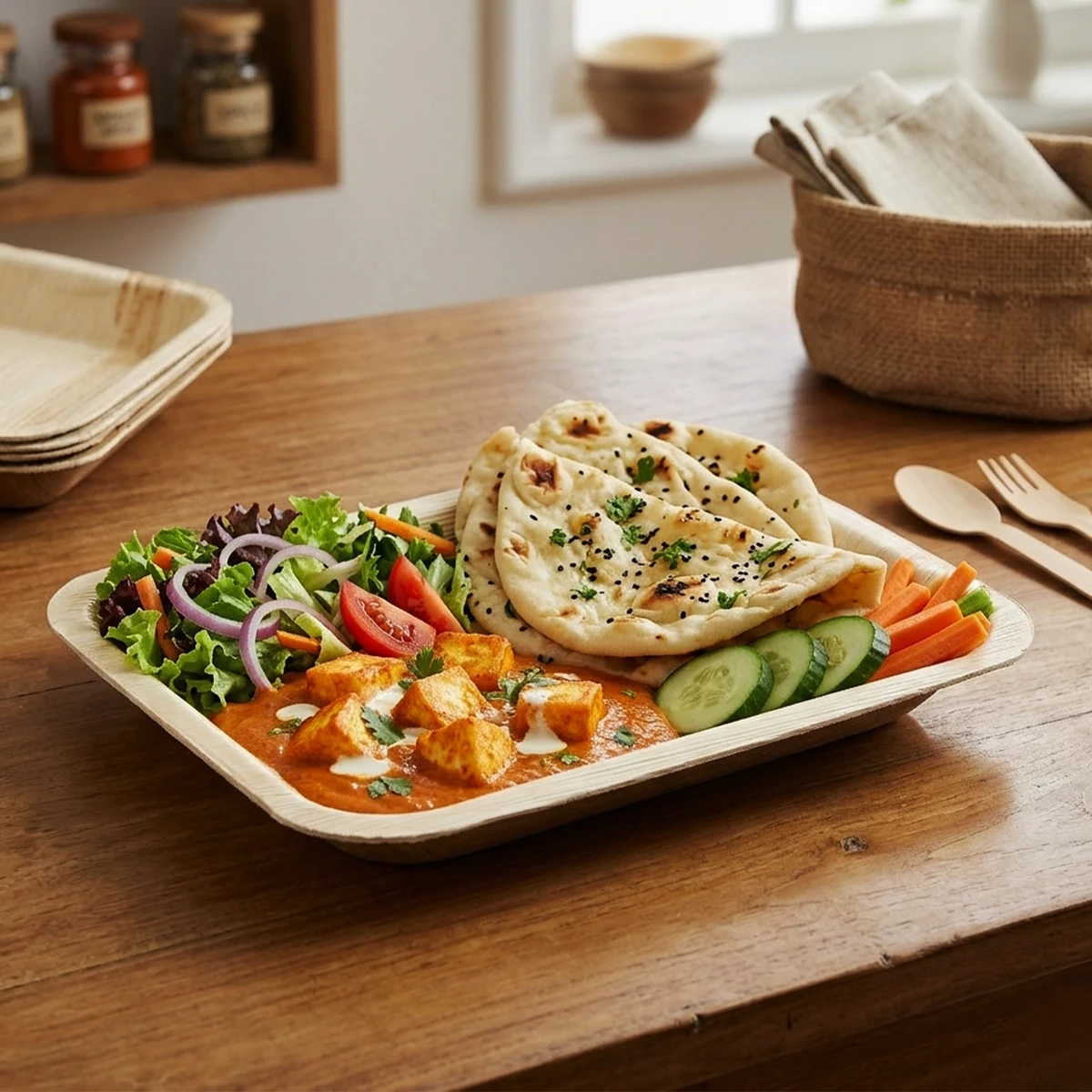
Experience Foliware's premium areca palm leaf tableware with a minimum order of just 1 carton. Ideal for first-time buyers, distributors, HoReCa businesses, and institutional procurement.
Experience Foliware's premium areca palm leaf tableware with a minimum order of just 1 carton. Ideal for first-time buyers, distributors, HoReCa businesses, and institutional procurement.
Extended producer responsibility, or EPR, attaches to whoever first makes a unit of packaging available in the national market where that packaging becomes waste. For goods shipped from India, that is the European importer or distributor in nearly every structure, not the Indian manufacturer. An Indian exporter cannot take the obligation off you by agreement, because it follows the first placing in the market, not the contract.
Buyers ask this question once and get five different answers, because they ask five different registries. The answers differ in mechanics and agree on the principle.
Regulation (EU) 2025/40, the Packaging and Packaging Waste Regulation, applies across the EU from 12 August 2026 and separates two roles that used to be blurred. The manufacturer is responsible for the conformity of the packaging: what it is made of, whether it meets the design rules, the technical documentation. The producer is responsible for financing recovery in the member state where the packaging becomes waste. One unit of packaging has exactly one manufacturer across the EU, and one producer in each member state where its waste arises.
The Zentrale Stelle Verpackungsregister, the German packaging register, calls the producer test domestic precedence: the producer is the party that initiates the supply chain in the member state where the packaging eventually becomes waste. Where the manufacturer is based abroad, the ZSVR is explicit that the first company in the domestic supply chain is the producer, whether that is an importer established in the member state placing third country goods on the market or a distributor established there placing goods brought in from another member state.
Outside the EU the wording changes and the answer does not. Miljødirektoratet defines a Norwegian producer as anyone who professionally imports or produces packaging or packaged products for the Norwegian market. UK guidance lists importing as one of six packaging activities that create an obligation. ADEME treats any company placing EPR products on the French market as a producer, whether manufacturer, distributor or importer.
Decide what is being registered before deciding who registers, because buyers routinely get this backwards.
The Reinforced Round Traditional Patravali Meal Plate is the product. The export carton, the inner liner or bag, the tape, the label, the stretch wrap, the corner boards, the top sheet and the pallet are the packaging. EPR contributions are calculated on the second list, by material and by weight. A buyer who asks a supplier for “the weight of the packaging” and gets back the gross weight of a full carton has measured the wrong thing.
Where the plates are later broken down into a consumer retail pack, that retail pack is a new unit of packaging with its own producer, and in France it is the unit carrying the on-pack marking.
Almost every buyer is in one of three shapes. The table names where the producer obligation sits in each.
| Structure | Who is the producer | What the Indian supplier does | Where it goes wrong |
|---|---|---|---|
| A. You import direct from India in your own name, on any Incoterm where your entity is the first to make the goods available in your market | Your entity, in the market where you first place the packaging | Supplies component materials and weights, packing specification, pallet configuration | Registration is discovered after the container is booked, and the licence application waits on weights nobody measured |
| B. You buy from a European importer or distributor who already brought the goods into the EU, UK or Norway | That importer or distributor, for the first placing it made. You become a producer only if you are the first to place the goods in a different national market, or if you rebrand | Supplies the same data to the importer, not to you | You assume you are clear, then open a second country and become the first placer there |
| C. You ask the Indian supplier to carry it, often expressed as buying DDP or asking the exporter to register | Still your entity in most cases. A company with no establishment in the market does not initiate the domestic supply chain by selling to a business there | Cannot register in most national registers on your behalf | The purchase order says the supplier is responsible, the register disagrees, and the penalty follows the register |
Structure C deserves a specific warning. Selling directly to end users in a market without a local branch is the one case where a foreign seller does carry the obligation, and the answer there is an authorised representative, not the exporter. The ZSVR requires foreign companies selling empty packaging or packaged products directly to end users in Germany without a German branch to appoint an authorised representative with a German registered office, who cannot be an employee of an affiliated company, and even then the foreign company must complete its own LUCID registration. Norway constrains this from the other direction: only entities with a Norwegian VAT number can register with a producer responsibility organisation, and a company without one may appoint a representative instead.
A business-to-business exporter selling to a European buyer is not selling directly to end users. Foliware India LLP is in that position, as is every comparable Indian manufacturer.
Run these in order for each market you supply. Question two is the answer to the article.
1. In which national market does this packaging become waste? Not where it lands, but where it is used and discarded. A container cleared in Rotterdam and sold in Germany becomes waste in Germany.
2. Which legal entity is the first to make that packaging available in that market? That entity is the producer and carries the registration, the contributions and the reporting. If the answer is your company, stop here and go to the market article.
3. Whose brand is on it? This changes the answer in the UK, which reports by packaging activity rather than by first placing alone. Filled packaging carrying your brand is reported by you under “supplied under your brand”. Where more than one brand appears, the first UK producer to supply the filled packaging reports it, and failing that the owner of the brand occupying the largest area. A UK packer must report branded packaging it packed or filled where the brand belongs to an organisation not established in the UK, so private label from India lands on the UK side.
4. Is there a threshold in that market, and do you cross it? This decides whether the obligation is live or dormant.
| Market | Threshold that brings you into scope |
|---|---|
| Netherlands | More than 50,000 kg of packaging placed on the Dutch market per year, with no threshold at all for single-use plastic packaging |
| United Kingdom | Turnover above £1 million and more than 25 tonnes of packaging supplied or imported, plus a qualifying packaging activity |
| Ireland | Major producer: 10 tonnes or more of packaging placed on the Irish market annually and turnover above €1 million |
| Norway | None. Membership of an approved producer responsibility organisation applies regardless of quantity |
| Germany, France, Sweden | Confirm with the ZSVR, your eco-organisme and Naturvårdsverket respectively for your product categories rather than assuming a de minimis exists |
A single European warehouse feeding several countries produces the most confusion, because the producer question is answered separately in each.
Stock imported into the Netherlands and sold there makes your Dutch entity the producer in the Netherlands. The same pallets moved onward and sold in Germany make whichever entity first makes them available in Germany the producer there, which may be the same company wearing a different hat, or a German customer. Repak notes that movements of packaging between member states are not treated as imports for the purposes of Article 18 of the PPWR, because the EU is a single market for that test. That removes the importer label on an intra-EU movement. It does not remove the producer question, which is asked country by country.
Two consequences for a hub operator. Your tonnage splits across several registers rather than concentrating in one, which can put you under a threshold in each place and over none. And your packaging data has to be capable of being cut by destination market, which is a systems requirement you set up at the start or retrofit painfully later.
Say the unhelpful part plainly, because buyers are sold the opposite.
An Indian manufacturer can supply the packaging specification every scheme needs: material and weight by component in kilogrammes, pieces per carton, cartons per pallet, pallet type and weight, and which components are plastic. Supplying it in the RFQ rather than in February is the single change that most reduces EPR friction. The dataset and the wording that gets it back usable are in the supplier data you need before you can file an EPR return.
An Indian manufacturer cannot be your producer of record in a European register while your entity is the first to place the goods on that market. It cannot hold a German LUCID registration for you, cannot hold a French identifiant unique covering your placings, cannot be a valid German authorised representative, and cannot register with a Norwegian producer responsibility organisation without a Norwegian VAT number. A clause in a supply agreement saying the supplier bears EPR does not move the obligation; it only creates a contractual indemnity you would have to enforce in India after the regulator has already come to you.
If carrying this yourself is not proportionate to your volume, the honest alternative is to buy from a European importer or distributor who is already the producer. You pay more per unit and you avoid a registration, a licence, a reporting cycle and in some markets an audit.
Once your entity is the producer, the mechanics are national and they differ more than the principle does. Germany separates registration from licensing and makes you report the same volumes twice, which is the sequence set out in LUCID, ZSVR and the steps before your first shipment. France adds a number your customers can demand and a mark that goes on the pack, covered in CITEO, the Triman mark and what goes on the pack. The Netherlands turns on a tonnage calculation and an estimate-and-reconcile cycle, described in Afvalfonds registration and the reporting cycle. Sweden, Denmark and Norway are three registrations on three rulebooks, one of them outside the EU, compared in packaging EPR across Sweden, Denmark and Norway. And the UK and Ireland diverged after Brexit, with Northern Ireland in a third position again, which is the subject of pEPR and Repak compared.
Can I put a clause in the purchase order making my supplier responsible for EPR? You can, and it does not change who the register holds responsible. The obligation follows the first placing on the national market, so a clause creates a contractual claim against your supplier, not a defence against the regulator.
My supplier says it is EPR registered. Does that cover me? Almost certainly not. Registration is national and specific to the entity placing the goods. Repak, for example, states it can only issue an EPR number to businesses placing packaging on the Irish market. Ask which register, which country and which entity name, then check that against who first places your goods.
Who is the producer if I buy from a European distributor? The distributor, for the placing it made in its own market. You become a producer if you are the first to place those goods in a different national market, or if you repack or rebrand them so that a new unit of packaging is placed by you.
Does the Indian manufacturer have any EPR role at all? Under the PPWR it may be the manufacturer, responsible for the conformity of the packaging it designs and fills, while the producer obligation sits with the first party placing it in the member state. Those are different roles, and only one of them is about paying for waste.
Am I the producer for the plates or only for the cartons? Packaging EPR applies to packaging. Plates, bowls and cutlery are the product. Cartons, liners, tape, labels, film and pallets are the packaging, and they are what you register, license and report. A retail pack made up later is a separate unit of packaging with its own producer.
Which entity should be the first placer if my group has several? Choose deliberately rather than by accident of invoicing. Thresholds are measured on that entity’s turnover and tonnage, and moving it later means closing one registration and opening another. Settle it before the first purchase order.
Lane, documentation and destination rules for the markets this article applies to. Each page carries the route, the paperwork set and the quotation route for that destination.
Each link below answers the question this article raises next, whether that is the rule behind a decision, the same question in another destination, or the commercial step that follows.
Send an enquiry naming the product, the annual volume and the destination: for example, the Reinforced Round Traditional Patravali Meal Plate, 45,000 pieces for Hamburg and Rotterdam. Name the legal entity that will be the first placer in each market, because that decides which packaging weights you need and in what format. The quotation comes back with materials and weights by component so your registration and licence applications can be prepared before the container is booked. See Germany , France , the Netherlands , Sweden and Ireland , or send the RFQ .