
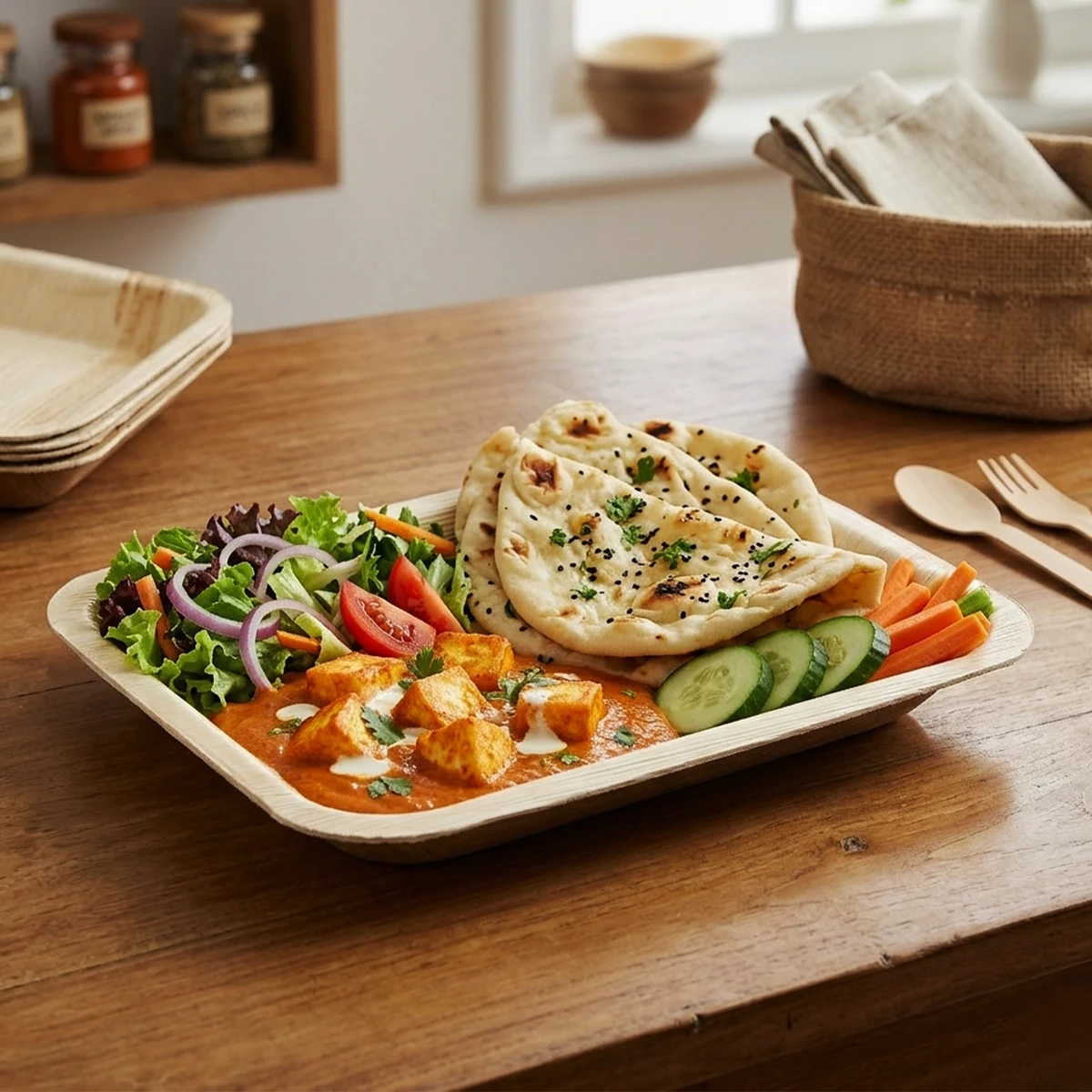
Start with a Trial Order 📦
Experience Foliware's premium areca palm leaf tableware with a minimum order of just 1 carton. Ideal for first-time buyers, distributors, HoReCa businesses, and institutional procurement.
Experience Foliware's premium areca palm leaf tableware with a minimum order of just 1 carton. Ideal for first-time buyers, distributors, HoReCa businesses, and institutional procurement.
A rolling supply plan sets the next 12 months of draw against known
peaks, wedding and banqueting season, festive periods, rather than
reordering each time stock runs low. It is a method, not a forecast:
list the months, mark where your own demand rises, phase carton orders
to land ahead of each peak within the standard lead time, and commit
indicative volume early so scheduling gets more certain, not less, as
the year goes on.
A buyer who reorders only when stock runs low is always ordering
against the shortest possible lead time and the least possible
scheduling flexibility. Every order lands as an urgent one, competing
for the same production loading as every other buyer’s urgent order,
with no room to phase quantity or absorb a delay. A rolling supply plan
replaces that pattern with a small amount of forward planning, done once
and adjusted as the year runs, rather than repeated crisis ordering.
The method has four steps, and it uses your own sales history, not an
industry figure that does not exist for this category.
Once the calendar is built, work back from each target delivery date
by the standard 14 to 21 business day lead time, plus whatever time your
own approval process needs, to fix an order confirmation date for that
phase. Where two peaks sit close together on the calendar, check that
their order confirmation windows do not collide, since production
loading is shared across every buyer’s orders placed in that window, not
reserved for any one buyer.
The earlier a volume is confirmed ahead of a known peak, the earlier
it can be scheduled into production, which is the practical reason
phasing orders against the calendar produces a smoother outcome than a
single large order placed close to the peak itself.
A rolling plan does not need to be placed as a single annual order.
It works equally well as a series of phased, confirmed orders across the
year, provided each one is confirmed early enough against its own target
date. What changes with a rolling plan is not the product or the
process, it is how far in advance Foliware has visibility into what is
coming. An order confirmed weeks ahead of its need date competes for
production loading on different terms than an order confirmed at the
last possible moment, simply because there is more room to schedule it
without disruption to other orders already in the queue.
Buyers who reach this stage after moving through the trial carton and
LCL stages set out in article 07 are usually the ones for whom a rolling
plan makes the most sense, since the product and the supply chain are
already proven and the only remaining variable is timing.
Wedding and banqueting season and major festive periods are genuine,
self-evident drivers of higher draw for catering and institutional
tableware in most markets Foliware serves. Beyond naming that these
periods exist, this article does not attach a figure to how much demand
rises, because no reliable figure for this category exists to cite. The
correct input for step 2 of the planner is your own sales history, not
an assumed industry curve. A plan built on your own numbers, adjusted
year to year as those numbers change, is more accurate than any general
seasonal statistic could be, and it is the only version of this method
that will not need correcting later.
What is a rolling supply plan? A twelve month method
for phasing tableware orders against known demand peaks in your own
business, rather than reordering each time stock runs low. It uses your
own sales history to mark high draw months, then works back from the
lead time to fix order confirmation dates ahead of each one.
Does this require one large annual order? No. It
works as a series of phased, confirmed orders across the year. What
matters is that each order is confirmed early enough against its own
target delivery date, not that the whole year is ordered at once.
How far ahead should I confirm an order for a known
peak? Count back 14 to 21 business days from the target
delivery date, then add whatever time your own approval process needs,
to find the order confirmation date for that phase.
Where do seasonal demand figures for this planner come
from? Your own sales history. No reliable published figure
exists for seasonal demand swings in this category, so the planner is
built on your own numbers rather than an assumed curve.
Does confirming volume earlier actually change
scheduling? Yes, in the sense that an order confirmed further
ahead of its need date has more room to be scheduled into production
without competing for the same tight window as orders confirmed at the
last moment.
Lane, documentation and destination rules for the markets this article applies to. Each page carries the route, the paperwork set and the quotation route for that destination.
Each link below answers the question this article raises next, whether that is the rule behind a decision, the same question in another destination, or the commercial step that follows.
Send the product, the volume and the destination. A quotation follows within one business day.