
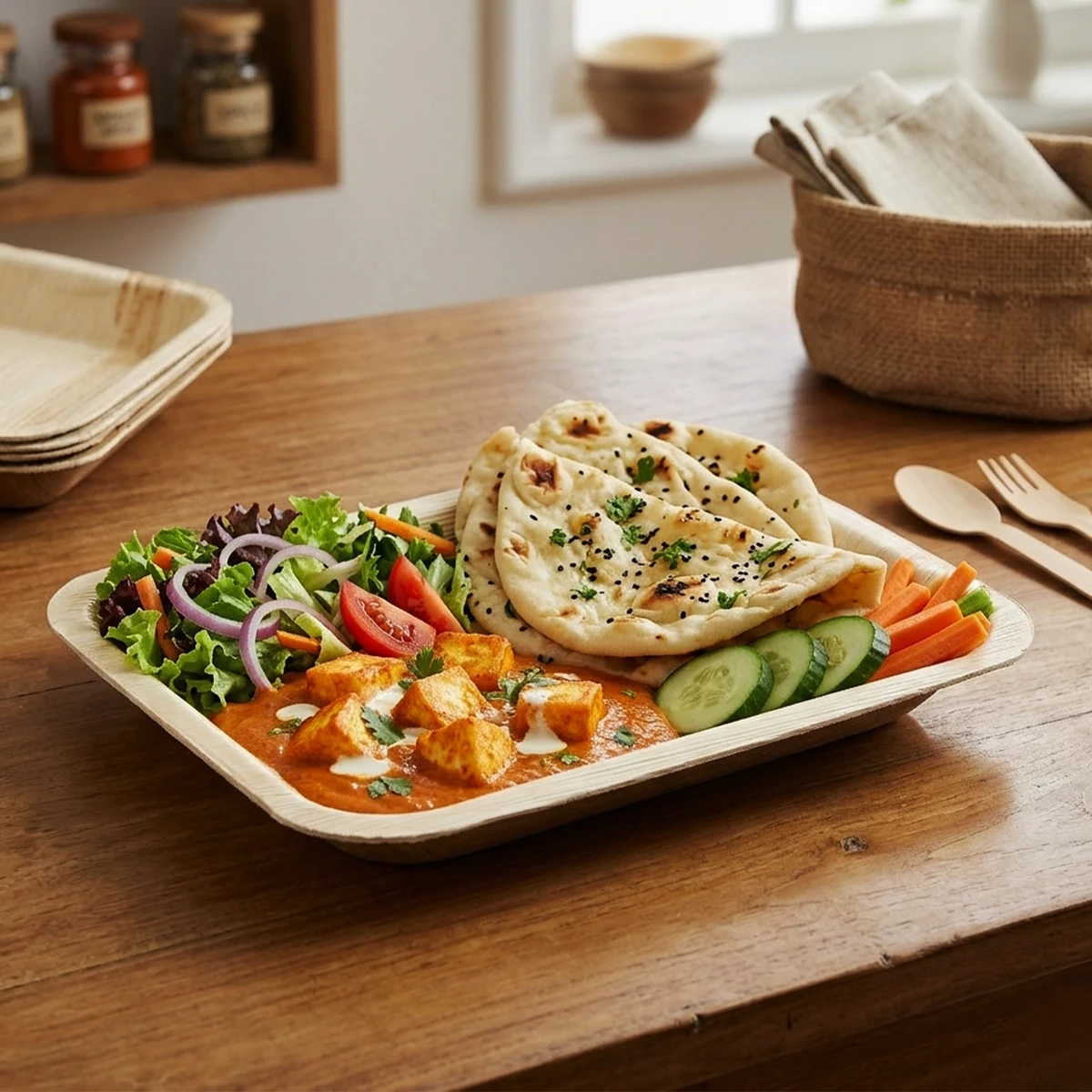
Start with a Trial Order 📦
Experience Foliware's premium areca palm leaf tableware with a minimum order of just 1 carton. Ideal for first-time buyers, distributors, HoReCa businesses, and institutional procurement.
Experience Foliware's premium areca palm leaf tableware with a minimum order of just 1 carton. Ideal for first-time buyers, distributors, HoReCa businesses, and institutional procurement.
A first order should move through three stages rather than straight
to a container. A trial carton tests the product against your own
specification. An LCL consignment tests the supply chain, packing,
documentation and delivery condition at a small but commercially real
volume. A full container commits to the supplier relationship at scale.
Each stage answers a different question, and skipping one usually just
moves its risk into the next.
A buyer new to a supplier is really asking three separate questions:
does the product itself meet specification, does the supply chain around
the product work as described, and does the relationship hold up at real
volume. A single order, however large, can only answer whichever
question that order was actually sized to test. A trial carton cannot
tell you how export documentation behaves, and a full container cannot
be undone if the product itself was wrong from the start. The
three-stage sequence exists to test each question at the volume where it
can actually be answered, before more volume is committed.
The minimum order is one carton per format, and a trial order is
usually one to three cartons covering the formats under evaluation.
Because a single carton sits well below the 1 CBM LCL minimum, a trial
order commonly moves outside the standard sea freight process, as a
small parcel or courier shipment, rather than through the LCL or full
container route.
What it proves. Whether the product matches your
specification: size, weight, finish, appearance, and whether the count
inside each carton matches what is stated. It also gives a first,
small-scale look at how the format performs in your actual service.
What it cannot prove. Consistency across a full
production run, how the export documentation and freight process behaves
at commercial volume, or how scheduling holds up once an order competes
for space in production alongside other buyers’ orders.
Decision gate. Before moving to Stage 2, verify the
trial carton using the count and condition check set out in article 05
of this series, and confirm the format performs in an actual service,
not just on inspection.
An LCL consignment is a commercially real order, at least 1 CBM,
moved through the standard export process via the named consolidation
ports, Chennai or Nhava Sheva (JNPT), rather than as a parcel
shipment.
What it proves. How the actual export documentation
and freight consolidation process behaves, how the goods arrive at
destination in terms of packing and delivery condition at real volume,
and whether the quotation process and the four drivers behind it,
covered in article 03, produce a quotation that matches what was
expected once the order is placed.
What it cannot prove. The economics or scheduling
certainty of a full container commitment, or how production loading
behaves when a larger, dedicated volume is booked against it.
Decision gate. Before moving to Stage 3, confirm the
documentation received matches what was expected for the destination,
and confirm delivery condition and count held up at this larger volume,
not just at trial carton scale.
A full container is a volume commitment, not a change in the product.
Moving from LCL to a full container changes how the shipment is
consolidated and scheduled, and it is the stage at which a distributor
or importer typically commits to Foliware as an ongoing supplier rather
than a one-off source.
What it proves. Whether the relationship holds up as
the primary or a major supply line for that format, once documentation,
delivery condition and quotation accuracy have already been confirmed at
the LCL stage.
What changes at this stage. The order moves from
proving the supplier to planning against the supplier. Article 08 in
this series covers how to build a rolling supply plan once a buyer has
reached this point.
Two patterns account for most of the trouble buyers report at this
stage of a new supplier relationship. The first is placing a full
container order without a trial carton first, which means the first
exposure to the product itself happens at maximum volume and maximum
stakes, with far more at risk if the specification does not match what
was expected. The second is placing an LCL order without ever having
verified a trial carton, which means the first exposure to documentation
and freight process is combined with an unverified product, so a problem
in either one is harder to isolate from the other.
The sequence exists to keep these questions separate. Each stage
should answer its own question cleanly before the next stage adds a new
variable.
Do I have to order a trial carton before a full
container? Not by rule, but skipping it means the product
specification is being tested for the first time at full volume, which
is the most expensive point to discover a mismatch. The sequence is a
recommendation built to separate product risk from supply chain risk
from volume risk.
What is the minimum order for a trial? One carton
per format is the minimum. A trial evaluating three formats is a three
carton order, not a one carton order, since the minimum applies per
format.
Why would a trial carton not ship as an LCL
shipment? LCL has a 1 CBM minimum, and a one to three carton
trial order typically falls well below that, so it usually moves as a
small parcel or courier shipment instead.
What does an LCL consignment prove that a trial carton
cannot? How the actual export documentation and freight
consolidation process behaves, and how the goods arrive at destination
in packing and delivery condition, at a volume that reflects a real
commercial order rather than a sample.
When should I move to a full container? Once the
trial carton has confirmed the product against specification and the LCL
consignment has confirmed documentation, delivery condition and
quotation accuracy at real volume. A full container is a volume and
relationship commitment, not a further product test.
Lane, documentation and destination rules for the markets this article applies to. Each page carries the route, the paperwork set and the quotation route for that destination.
Each link below answers the question this article raises next, whether that is the rule behind a decision, the same question in another destination, or the commercial step that follows.
Send the product, the volume and the destination. A quotation follows within one business day.